
More actions
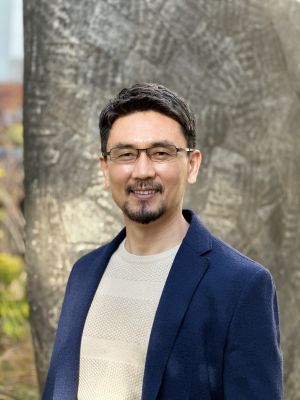
Director
Center for Quantum Sapient Workforce
Professor of Physics
Department of Physics
Korea University
Mahn-Soo Choi is a professor of physics at Korea University and the director of School of Quantum in South Korea. He holds a Ph.D. in theoretical physics from POSTECH in 1998. Following a postdoctoral fellowship at the University of Basel in Switzerland and a research fellowship at the Korea Institute for Advanced Study, he joined the Faculty of Physics at Korea University in 2002. His research interests have evolved from his doctoral dissertation in condensed matter theory to encompass quantum computation and quantum information. His areas of expertise include quantum algorithms, quantum simulations, superconducting qubits, spin qubits in quantum dots, and circuit quantum electrodynamics in quantum hybrid systems, as well as mesoscopic transport.
고려대학교 물리학과 최만수 교수는 고려대학교 주관 양자대학원의 원장이기도 하다. 그는 포스텍에서 1998년에 이론 물리학으로 박사 학위를 취득했다. 그 후 스위스 바젤대학에서 박사 후 연구원으로 근무한 뒤 한국고등과학원에서 연구펠로우를 거쳐, 2002년에 고려대학교 물리학과에 조교수로 부임하여 2010년 정교수가 되었다. 그는 응집물질물리 이론으로 연구 경력을 시작해 양자 계산과 양자 정보 이론으로 연구 분야를 확대했다. 그는 양자점의 스핀 큐비트, 초전도 큐비트, 초전도 회로 QED 및 관련 양자 하이브리드 시스템, 그리고 중시계 양자수송현상에 대해 연구해 왔다.
Research Interests
He is working on quantum information theory and theoretical condensed-matter physics. He seeks physical principles and methods for coherent manipulation of quantum states of mesoscopic systems, and studies the effects of such manipulation on various phenomena including quantum transport and quantum information processing. Specifically, topics of his particular interest include quantum transport in mesoscopic and nanoscale systems, transport properties of topological mattes, dynamics of topological states of matter, spin qubits on quantum dots, superconducting qubits, and circuit quantum electrodynamics.
See the Research Overview page of the group.
Contact Information
- Office: 414 in Asan Science Building
- Phone: 02-3290-3110
- E-mail: choims(a)korea.ac.kr